Source handmade christmas simulation flower for Wedding, Hotel, Home
Compare 30 listings of handmade christmas simulation flower from verified suppliers. Buyers can evaluate customization options, material durability, and delivery times for indoor and outdoor decoration needs.
Key considerations
Products List


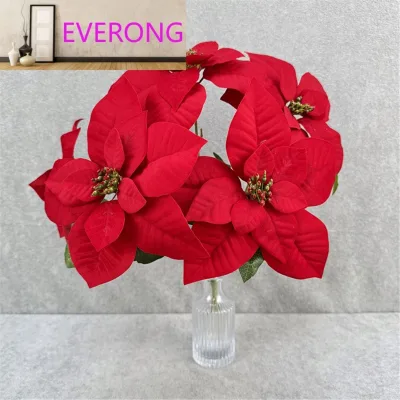


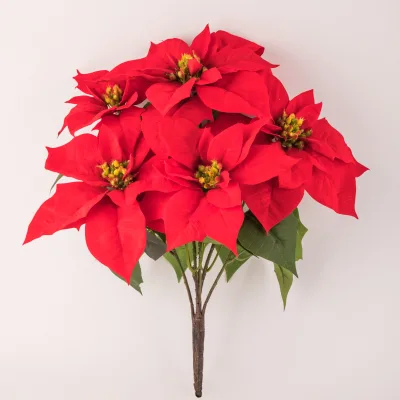
Comprehensive Sourcing Guide
Strategic Sourcing Guide for Handmade Christmas Simulation Flowers
Procuring handmade Christmas simulation flowers requires a nuanced approach that balances aesthetic authenticity with rigorous supply chain verification. The market for artificial floral arrangements, particularly those designed for festive decoration, is vast, yet the specific segment of "handmade" items introduces distinct variables regarding labor intensity, material consistency, and quality control. Buyers must navigate a landscape where product attributes vary significantly between listings, even when categorized under similar keywords. This guide provides a structured framework for evaluating suppliers, understanding technical specifications, and mitigating risks associated with sourcing these decorative items from international markets, specifically focusing on the data points available in the current supply environment.
Technical Specifications and Material Composition
The foundation of any successful procurement strategy lies in a precise understanding of the technical specifications provided by the supplier. In the context of handmade Christmas simulation flowers, the "handmade" designation implies a higher degree of manual assembly compared to fully automated production lines. This often results in unique variations in stem length, petal arrangement, and overall volume, which can be a feature for boutique buyers but a risk for large-scale standardization.
When reviewing product data, buyers must scrutinize the stated material features. The supply context indicates that high-quality simulation flowers often possess durability and low-temperature resistance, attributes essential for items that may be displayed in varying environmental conditions. For instance, some listings specify materials that are resistant to low temperatures, ensuring that the flowers do not become brittle or degrade when used in unheated outdoor spaces or during winter transport. Conversely, other entries may list "Plastic" as the standard material, which requires further verification regarding the specific polymer grade used to ensure UV stability and colorfastness.
The physical dimensions are equally critical. Specifications in the current dataset show a wide range of standard sizes, such as 110cm or approximately 97cm, alongside custom dimensions. Buyers should not assume a uniform size across a supplier's catalog. Instead, they must request detailed dimension sheets for each SKU. The "prod_standard" field often contains specific measurements, but in some cases, it may simply state "Plz ask for a catalog," indicating that precise technical data is not pre-published. In such instances, the buyer must explicitly request a technical drawing or a physical sample to verify the scale and proportion before committing to a bulk order.
Compliance, Certification, and Safety Standards
Safety and compliance are paramount, especially for products intended for public activity spaces, hotels, and weddings. While the core keyword focuses on "handmade" aesthetics, the end-use environment dictates strict adherence to safety standards. The observed product attributes include a "Scratch-Proof Design," which is a positive indicator for durability and user safety, particularly in high-traffic areas where decorations might be touched or bumped.
However, buyers must remain vigilant regarding certifications. The available data lists "CE" and "RoHS" with low confidence, meaning these cannot be assumed as verified facts for any specific supplier without direct confirmation. In the B2B procurement of artificial flowers, compliance often involves fire retardancy standards, particularly for items used indoors in public venues like hotels and restaurants. Buyers should explicitly request current test reports for fire safety (such as BS 5867 or NFPA 701) rather than relying on general claims. Similarly, environmental claims such as "Environmentally Friendly" require substantiation. If a supplier claims their products are eco-friendly, the buyer should ask for specific documentation regarding the recyclability of the materials or the absence of hazardous substances, rather than accepting the label at face value.
Furthermore, the "Safety Design" attribute, such as being scratch-proof, should be verified through physical inspection. A product described as safe on paper may still have sharp edges on the wire stems or plastic components if the handmade assembly is not precise. Therefore, the procurement process must include a stage for verifying that the physical product matches the safety claims made in the product description.
Cost Drivers and Pricing Structures
Understanding the cost drivers for handmade Christmas simulation flowers is essential for budgeting and negotiation. The observed price range in the market spans from $0.19 to $16.88 USD, a significant variance that reflects differences in complexity, material quality, and order volume. The "Sample Price" is noted to range between $2 and $100, which suggests that the cost of a single unit can vary drastically depending on the intricacy of the design.
Several factors influence the final unit price. First, the "Handmade" process inherently increases labor costs compared to machine-made alternatives. The time required to assemble each flower, attach leaves, and ensure a natural appearance adds a premium to the base material cost. Second, the customization level is a major cost driver. The data indicates that customization is available for some products, while others are "Non-Customized." Custom orders, which may involve specific color combinations like "White, Red, Green + Rose Red," or unique logo printing, will invariably carry higher costs and longer lead times.
The Minimum Order Quantity (MOQ) also plays a critical role in pricing. The observed MOQ range is from 2 to 4800 units. Suppliers with lower MOQs may charge a higher per-unit price to cover setup and administrative costs, whereas high-volume orders benefit from economies of scale. Buyers should be aware that the "Service" options, such as DIY, OEM, or Stock, will impact the final price. OEM (Original Equipment Manufacturer) services, where the supplier produces goods under the buyer's brand, typically involve additional costs for branding and packaging customization.
Typical Applications and Adaptability
The versatility of handmade Christmas simulation flowers is a key selling point, with applications ranging from private residences to large commercial venues. The product attributes list "Indoor" and "Outdoor" as suitable applications, making these items adaptable for a wide array of settings. Specific use cases mentioned include homes, weddings, restaurants, supermarkets, and hotels. The "Atmosphere Creation Function" is the primary utility, suggesting that these products are designed to enhance the visual appeal of a space rather than serve a functional purpose.
For public activity spaces, the durability of the material becomes a critical factor. Items displayed in supermarkets or hotel lobbies are subject to constant handling and lighting exposure. The "Lifetime" of these products is estimated at 3-5 years, which is a reasonable expectation for high-quality artificial flowers, but this should be verified against the specific lighting conditions of the intended display area. Prolonged exposure to direct sunlight can cause fading, even in "Environmentally Friendly" materials, so buyers should inquire about UV-resistant treatments if the flowers are to be used in sunlit areas.
The "Style Category" often falls under "Classic Traditional Style," which aligns well with Christmas themes. However, buyers must ensure that the specific style matches their brand identity or event theme. The "Multicolour" attribute suggests a variety of color options, but the exact palette must be confirmed. For instance, a specific listing might offer "White, Red, Green + Rose Red," while another might focus on monochromatic schemes. Matching the color profile to the overall decor is essential for a cohesive aesthetic.
Supplier Evaluation and Verification
Evaluating suppliers for handmade products requires a deeper level of due diligence than for mass-produced items. The "Handmade" aspect implies that quality control is dependent on the skill of the individual workers, leading to potential inconsistencies. Buyers should prioritize suppliers who offer a robust "Customer Service" framework. While one data point mentions "Inferior Refunds," this likely refers to a specific policy regarding defective goods rather than a general service rating. Buyers should seek suppliers who offer clear return policies and responsive communication channels.
The "Delivery Time" is another critical metric. The data shows a range of 3-7 days for stock items and 7-15 days for custom orders. However, other entries suggest lead times of 10-15 days. Buyers must clarify the distinction between "stock" and "custom" lead times to avoid delays. The "Shipping Method" options, including "by Sea" and "by Air," offer flexibility but come with different cost and time implications. For time-sensitive Christmas orders, air freight may be necessary despite the higher cost, whereas sea freight is more economical for bulk stock replenishment.
When evaluating a supplier, buyers should request a catalog to verify the "prod_standard" and "prod_model" details. Some suppliers may list "Plz ask for a catalog," indicating a need for direct communication to access full product details. A reliable supplier will provide a comprehensive catalog with clear images, specifications, and pricing tiers. Additionally, verifying the "prod_origin" is important; the data points to "China" and "Guangdong, China" as origins, which are known manufacturing hubs but require careful vetting to ensure ethical labor practices and quality standards.
Quality Control and Long-Term Procurement
Implementing a rigorous quality control (QC) process is non-negotiable for handmade simulation flowers. Given the "Handmade" nature, a random sampling inspection is insufficient; a more thorough inspection protocol is required. Buyers should consider hiring third-party inspection agencies to check for defects such as loose petals, discoloration, or structural instability in the stems. The "Packing Detail" varies from "with Wrapping" to "Without Wrapping," and "Ppbag/Handbag/Carton." Proper packaging is essential to prevent damage during transit, especially for fragile handmade items.
Long-term procurement considerations involve building a relationship with a supplier who can maintain consistency over multiple seasons. The "Lifetime" of 3-5 years suggests that these products are durable, but buyers should plan for periodic replacement or refreshment of their inventory. Establishing a recurring order schedule can help secure better pricing and prioritize production slots during peak seasons. Furthermore, buyers should maintain open communication regarding any changes in design or material availability to ensure continuity in their product offerings.
In conclusion, sourcing handmade Christmas simulation flowers requires a balance of aesthetic appreciation and technical rigor. By focusing on verified specifications, demanding clear compliance documentation, and maintaining strict quality control measures, buyers can secure high-quality products that meet their specific needs. The variability in the market, from price points to lead times, necessitates a proactive approach to supplier evaluation and contract management. Ultimately, the success of the procurement lies in the buyer's ability to navigate the nuances of the handmade market and establish partnerships that deliver value and reliability.
| Attribute Category | Key Considerations | Verification Action |
|---|---|---|
| Material & Durability | Low-Temperature Resistant, Plastic, Environmentally Friendly | Request material safety data sheets (MSDS) and UV resistance test reports. |
| Dimensions & Standards | 110cm, 97cm, 25*25, Custom | Request physical samples to verify scale and "prod_standard" accuracy. |
| Pricing & MOQ | Range $0.19-$16.88, MOQ 2-4800 | Negotiate tiered pricing based on volume and clarify sample costs ($2-$100). |
| Lead Time & Shipping | 3-7 days (Stock), 7-15 days (Custom), Sea/Air | Confirm exact lead time for custom orders and calculate shipping costs for urgency. |
| Safety & Compliance | Scratch-Proof, CE, RoHS (Low Confidence) | Demand current fire safety and chemical compliance certificates; do not assume. |
| Packaging | Carton, Ppbag, Handbag, With/Without Wrapping | Specify packaging requirements in the purchase order to prevent transit damage. |
FAQs
What customization options are available for these flowers?
Customization is available for specific product models like SIT5-102801, while other items may be non-customized. Buyers can request OEM services or stock items depending on the supplier's capability, allowing for tailored designs or ready-made solutions.
How long does delivery take for stock items versus custom orders?
Delivery for stock items typically takes 3 to 7 days, whereas custom orders require a lead time of 7 to 15 days. Some listings indicate a 10 to 15-day window for production, so buyers should confirm the specific timeline before placing an order.
Which materials ensure durability for outdoor use?
Products feature durability and low-temperature resistance, making them suitable for outdoor and indoor applications. Some specifications list plastic as the material, but buyers should verify UV stability and colorfastness to ensure the flowers withstand environmental exposure over their 3-5 year lifetime.
Can I find suppliers offering scratch-proof safety designs?
Yes, some listings explicitly mention a scratch-proof design to enhance safety in public activity spaces. This feature is particularly useful for high-traffic areas like hotels and supermarkets, though physical inspection is recommended to verify the absence of sharp edges on stems.
What is the price range for samples and bulk orders?
Sample prices range from $2 to $100, while bulk unit prices observed in the market span from $0.19 to $16.88. The final cost depends on the complexity of the handmade process, customization level, and the minimum order quantity required by the specific supplier.
How are these flowers packed for shipping?
Packing details vary, with options including cartons, PP bags, handbags, or wrapping with or without wrapping. Proper packaging is essential to prevent damage during transit, especially for fragile handmade items, and buyers should specify their preference when confirming the order.
Which certifications should I verify for fire safety compliance?
While CE and RoHS are mentioned with low confidence, buyers should explicitly request current test reports for fire safety standards like BS 5867 or NFPA 701. Relying on general claims is insufficient for public venues, so verified documentation is necessary for compliance.